Starting and growing a business involves much more than developing a product or expanding into new markets. Every stage of a business—from its incorporation to day-to-day operations and long-term growth—may involve legal considerations. Whether a company is entering into commercial contracts, bringing in investors, expanding its operations or responding to regulatory requirements, understanding the applicable legal framework can help businesses make informed decisions.
Corporate law provides the legal foundation on which businesses operate. It governs how companies are established, managed and regulated while also addressing the legal relationships between shareholders, directors, investors, employees, customers and regulatory authorities. Since every business has different objectives and operational requirements, the legal support required often varies depending on the nature of the organisation and the transactions involved.
Understanding Corporate Legal Services
Corporate legal services extend beyond resolving disputes or representing businesses before courts. Much of corporate legal work involves helping organisations understand their legal obligations, structure commercial transactions and maintain compliance with applicable laws.
Businesses looking for guidance from a Best Corporate Law Firm in India may require assistance with company formation, commercial agreements, regulatory compliance, corporate governance, mergers and acquisitions, investment transactions and other business-related legal matters. The appropriate legal approach depends upon the facts of each matter, the commercial objectives of the business and the laws applicable to the transaction.
The Business Lifecycle and Legal Requirements
The legal needs of a business often evolve as it grows. A newly incorporated company may require assistance with its legal structure and incorporation, while an established organisation may focus on expansion, investments or strategic transactions.
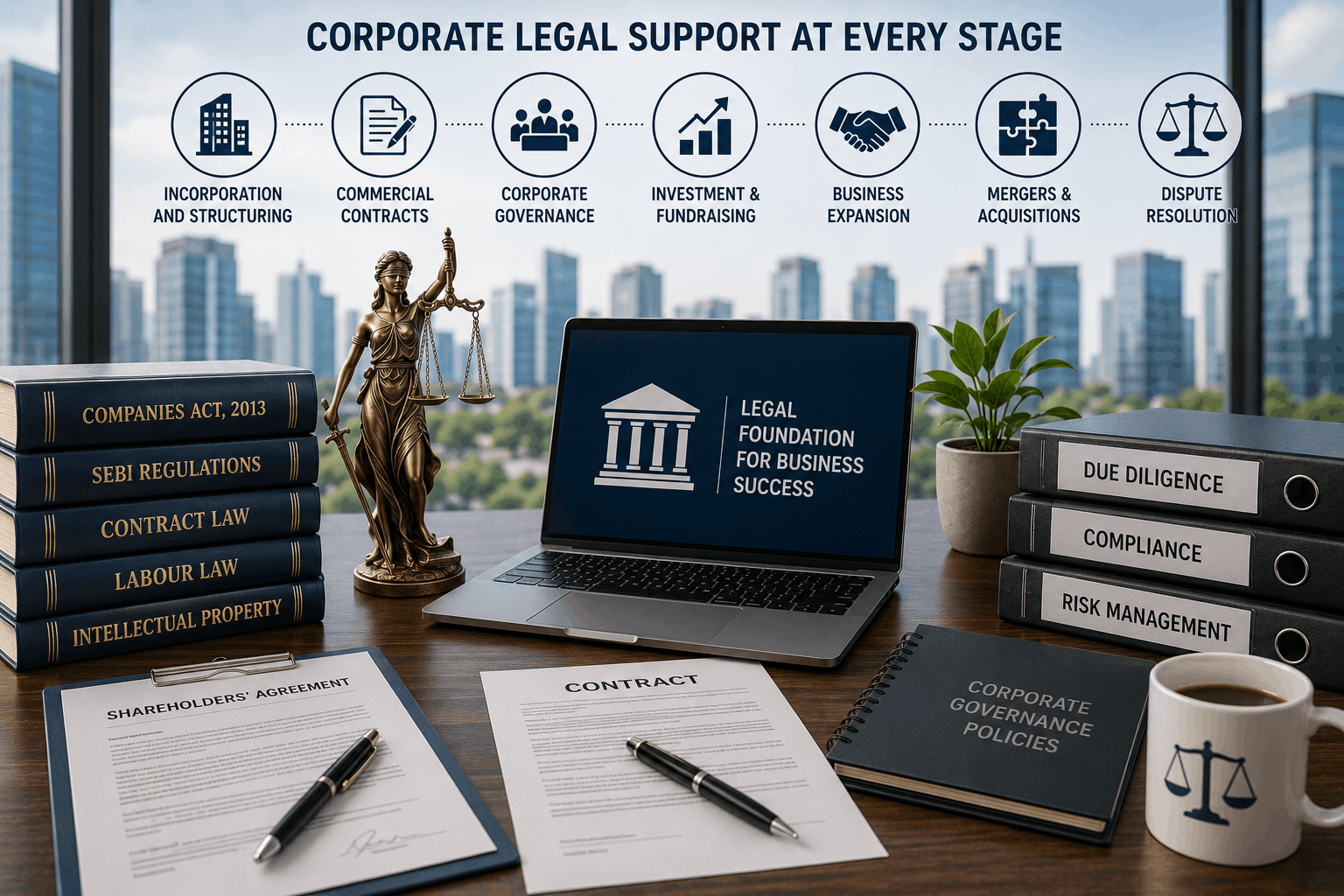
Some common stages where legal guidance may become relevant include:
Incorporation and business structuring
Drafting commercial contracts
Corporate governance and compliance
Investment and fundraising
Business expansion
Joint ventures and strategic collaborations
Mergers, acquisitions and restructuring
Corporate dispute resolution
Each stage presents different legal considerations, making it important to evaluate the applicable legal framework according to the specific circumstances of the business.
Company Formation and Business Structuring
One of the earliest legal decisions for any business involves selecting an appropriate business structure. The legal framework governing a company may differ depending on factors such as ownership, management, funding requirements and long-term business objectives.
During the initial stages of a business, legal considerations may include incorporation, constitutional documents, shareholder arrangements, regulatory registrations and compliance with applicable statutory requirements. Establishing an appropriate legal structure at the outset provides a foundation for future business operations.
Commercial Contracts
Commercial relationships are often governed through written agreements that define the rights and responsibilities of the parties involved. Businesses regularly enter into contracts with customers, suppliers, consultants, service providers, distributors, technology partners and other stakeholders.
Depending on the transaction, agreements may address commercial terms, payment obligations, confidentiality, intellectual property, termination provisions and dispute resolution mechanisms. Since every commercial arrangement is different, contractual documentation should reflect the specific understanding reached between the parties.
Corporate Governance and Regulatory Compliance
As businesses grow, compliance with legal and regulatory requirements becomes an important aspect of corporate management. Corporate governance broadly refers to the systems and processes through which a company is directed and managed while ensuring accountability and compliance with applicable laws.
Regulatory obligations may differ depending on the nature of the business, the industry in which it operates and the laws governing its activities. Understanding these obligations helps organisations manage legal responsibilities while supporting sustainable business operations.
Investment, Expansion and Strategic Transactions
As businesses evolve, they may seek new opportunities through investment, expansion or strategic collaborations. These transactions often involve legal and commercial considerations that require careful planning and documentation.
Depending on the nature of the transaction, legal matters may include shareholder arrangements, investment documentation, joint ventures, business restructuring, mergers and acquisitions, corporate due diligence and regulatory approvals. Since each transaction has its own commercial objectives, the legal framework should always be assessed according to the specific facts and applicable laws.
Managing Corporate Risks
Every business operates within a legal and regulatory environment where commercial decisions may give rise to legal obligations. Identifying potential legal risks at an early stage can help businesses better understand their responsibilities and reduce uncertainty during commercial transactions.
Corporate risk management may involve reviewing contractual obligations, monitoring regulatory compliance, maintaining corporate records and ensuring that business practices align with applicable legal requirements. The nature of these risks varies depending on the industry, the size of the organisation and the type of business activities undertaken.
Resolving Corporate and Commercial Disputes
Despite careful planning, disputes may sometimes arise during the course of business. These may relate to contractual obligations, shareholder issues, commercial transactions, regulatory matters or other corporate relationships.
Not every dispute necessarily requires court proceedings. Depending on the facts of the matter, some issues may be resolved through discussions, negotiation, mediation or arbitration where applicable. However, where a dispute cannot be resolved through these methods, legal proceedings before the appropriate court, tribunal or other competent authority may become necessary. The appropriate legal remedy depends upon the facts of the case, the available documentation and the applicable legal framework.
The Importance of Timely Legal Guidance
Legal considerations are often easier to address when identified at an early stage rather than after a dispute has developed. Reviewing legal documents, understanding contractual obligations and being aware of regulatory requirements can help businesses make informed decisions throughout their operations.
Since every organisation functions differently, the legal approach should always be tailored to the particular transaction, commercial objective and applicable legal provisions rather than applying a standard solution to every situation.
Frequently Asked Questions
What does corporate law generally cover?
Corporate law deals with the legal framework governing the formation, management, operation and restructuring of businesses. It also includes matters relating to corporate governance, commercial contracts, regulatory compliance, investments and business transactions.
Do all businesses require the same legal support?
No. The legal requirements of a business depend on factors such as its size, industry, organisational structure, commercial activities and the nature of the transactions involved.
Why are commercial contracts important?
Commercial contracts define the rights and obligations of the parties involved in a transaction. Proper documentation helps provide clarity regarding commercial arrangements and establishes the legal framework governing the relationship.
What is corporate governance?
Corporate governance refers to the systems, principles and processes through which a company is managed and controlled. It promotes accountability, transparency and compliance with applicable legal and regulatory requirements.
Can every corporate dispute be resolved in the same way?
No. Every dispute has its own facts and circumstances. Depending on the matter, disputes may be addressed through negotiation, mediation, arbitration or legal proceedings before the appropriate forum.
Conclusion
Corporate law plays an important role throughout the lifecycle of a business. From company formation and commercial contracts to regulatory compliance, strategic transactions and dispute resolution, legal considerations form an integral part of business operations.
Whether an organisation is in its early stages or managing complex commercial transactions, understanding the legal framework governing business activities can support informed decision-making and responsible corporate management. Since every business presents different legal and commercial considerations, the appropriate legal approach should always be determined according to the facts of the matter, the applicable law and the objectives of the organisation.